Colonnade at San Marco
Venice, Italy
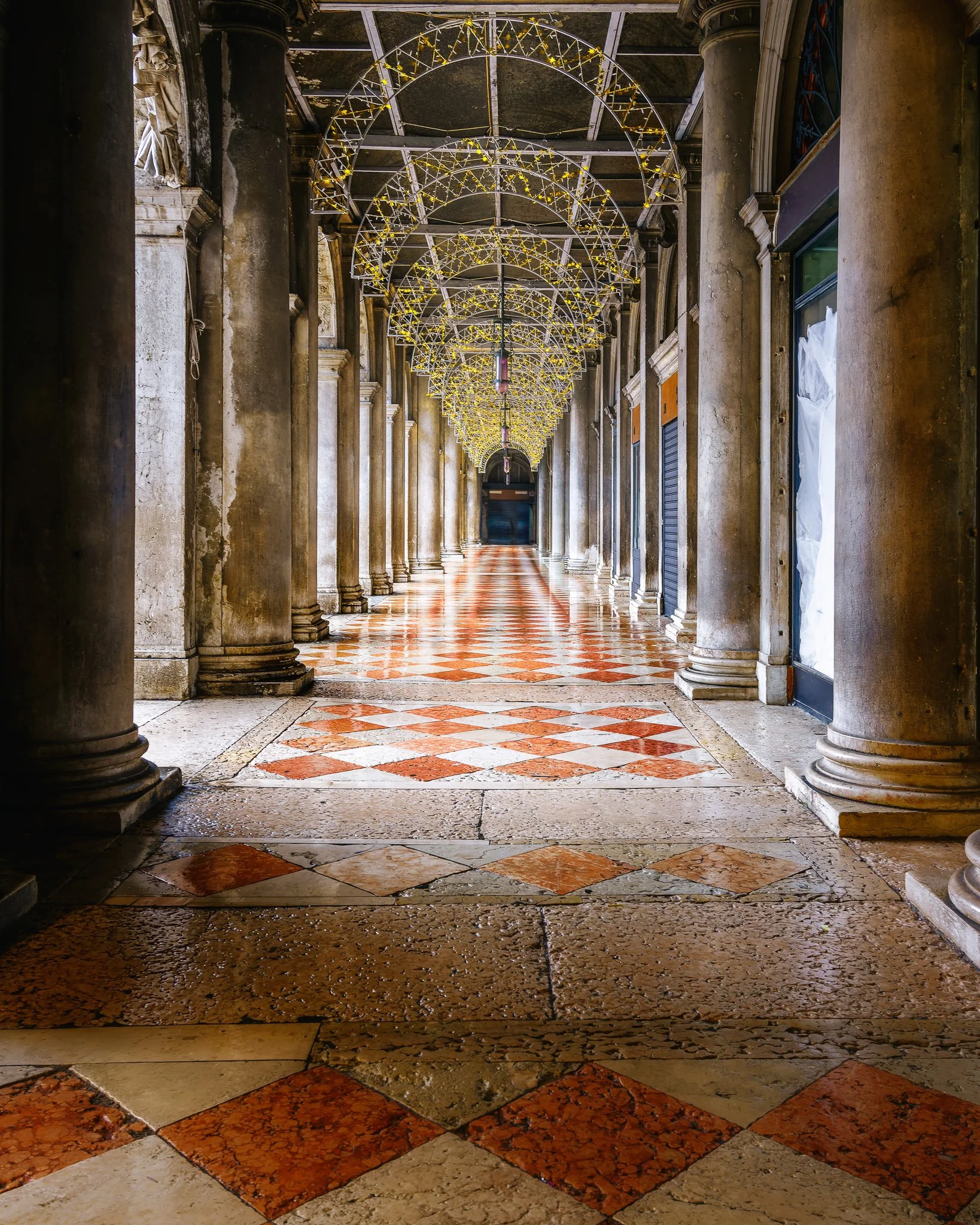
Within the colonnades of St Mark’s Square, space is defined not by openness, but by repetition and structure. A sequence of stone columns extends into the distance, creating a rhythmic passage that draws the eye forward with quiet insistence. The architecture becomes both frame and subject, shaping the experience of movement and stillness simultaneously.
The perspective is central and deliberate. Each column stands in measured alignment, forming a series of vertical anchors that guide the gaze toward a distant vanishing point. This sense of order is reinforced by the floor, where geometric patterns of red and white marble repeat with precision, echoing the architectural rhythm above.
Light moves carefully through the space. It does not flood the scene, but instead settles across surfaces, revealing texture and age. The stone columns carry subtle variations in tone, marked by time and wear, while the polished floor reflects light in a softer, more fluid way. These contrasts create depth without disrupting the overall harmony.
Above, a sequence of illuminated arches introduces a delicate layer of detail. The lights form a gentle canopy, their intricate patterns suspended across the ceiling. They add a sense of refinement and continuity, guiding the eye along the length of the colonnade while softening the rigidity of the structure.
The space feels both grand and intimate. While the scale of the architecture suggests openness, the framing of the columns creates a contained environment, encouraging a slower, more deliberate engagement. The absence of people allows the structure to speak clearly, uninterrupted by movement.
Subtle elements along the edges—doorways, windows, and variations in stone—add texture without distracting from the central composition. These details provide context and depth, grounding the image in a real place while maintaining its abstract qualities.
The colour palette is restrained yet rich. Warm tones of stone and terracotta are balanced by cooler shadows and the neutral greys of aged surfaces. This balance enhances the sense of timelessness, allowing the image to feel both historic and present.
This photograph is a study in order and continuity. It captures a moment where architecture defines space through repetition and alignment, and where light reveals the quiet complexity within a seemingly simple structure. The result is an image that invites the viewer to follow its rhythm, moving gradually toward its distant centre.