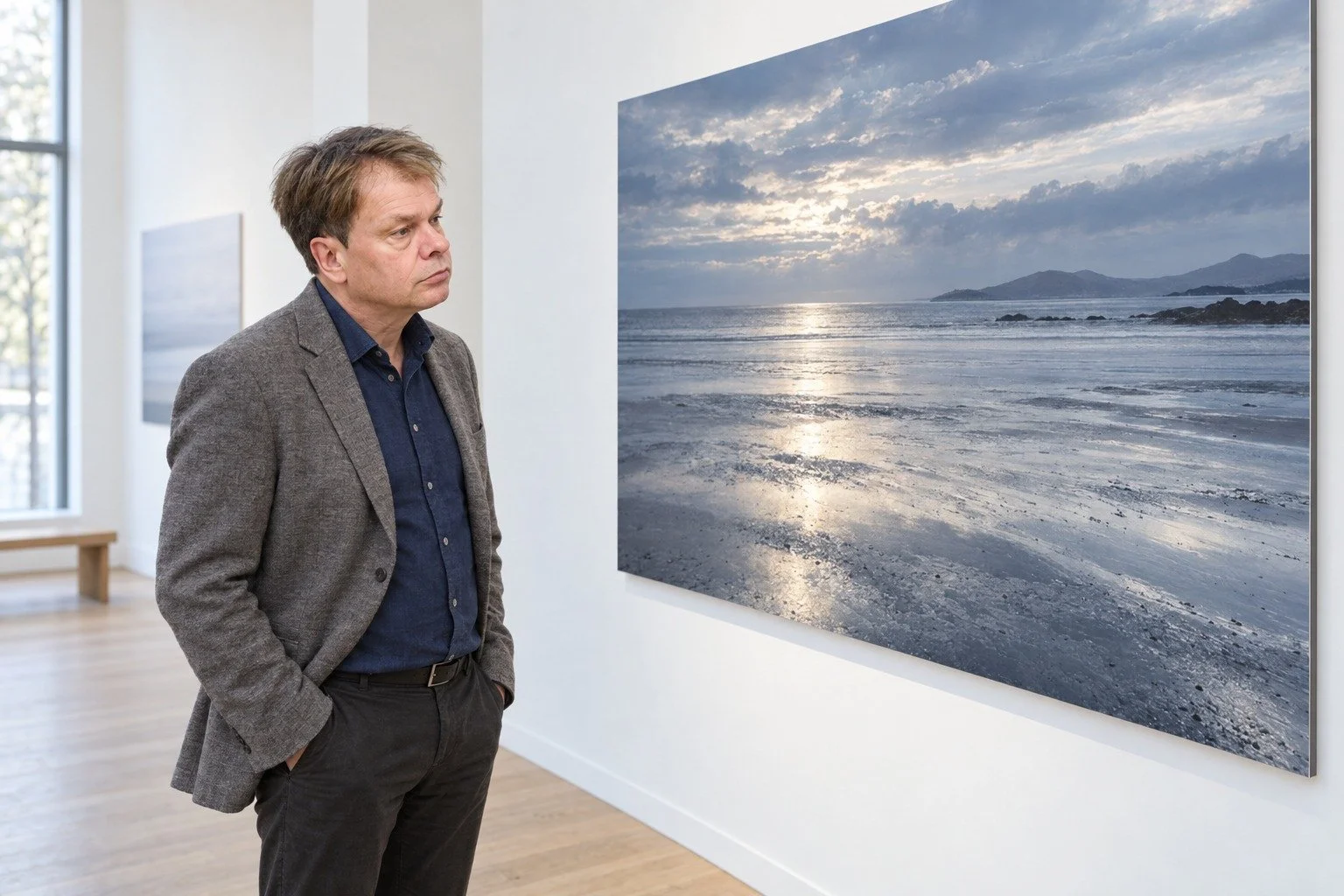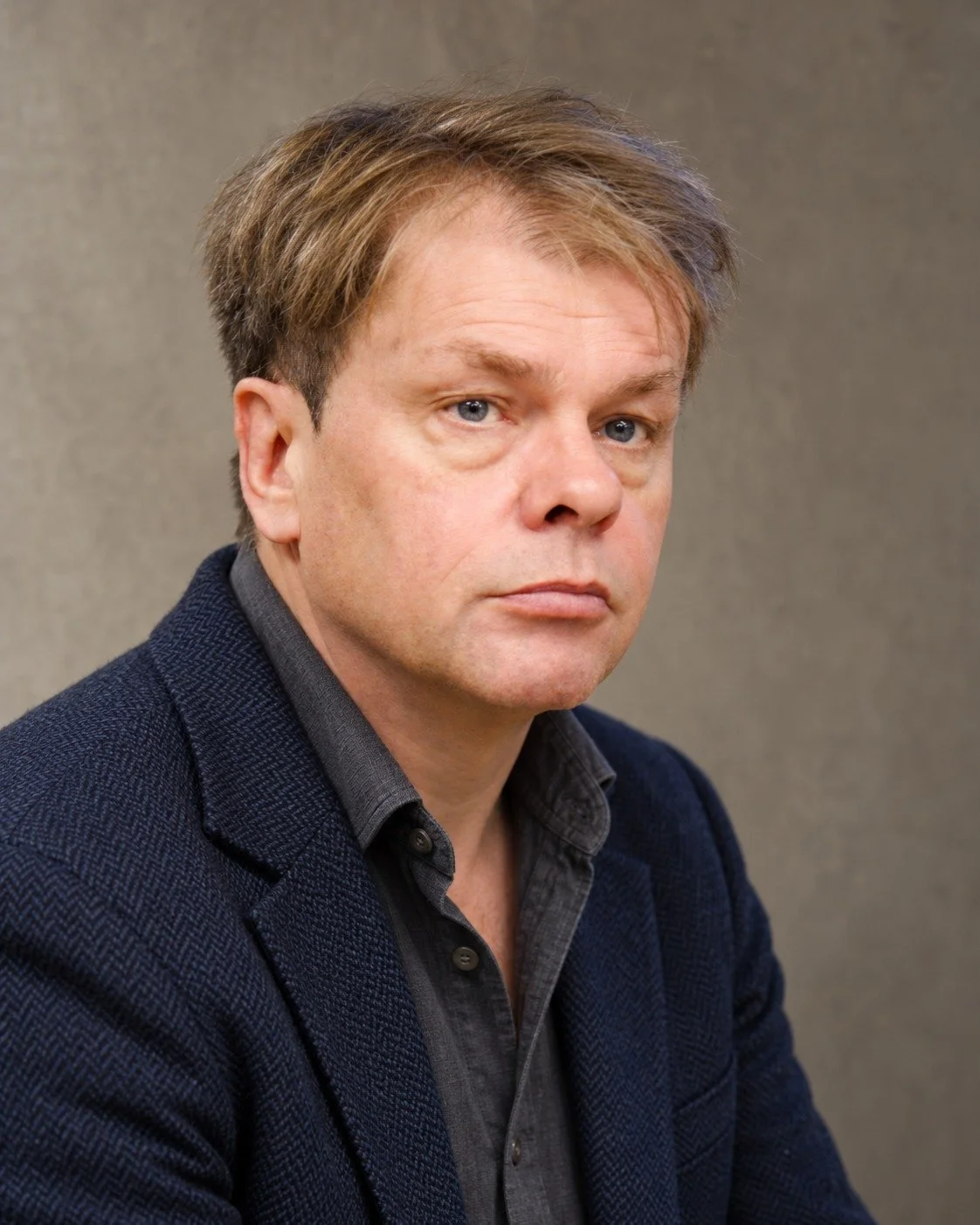
MEET JOHN WRIGHT
Fine Art Photographer based in Swanage, Dorset
Photography, for me, begins with noticing
I am drawn to the moments when a place becomes quieter than expected: early light falling across a city, mist settling over water, an empty stretch of coast, or the geometry of a building revealed by shadow. They are often ordinary moments, but given time and attention they can take on a different presence.
A Life Shaped by Place
I was born and brought up in Oxford, studied in London and spent much of my working life living and working internationally. That took me to places including Tbilisi and Kyiv, cities that became part of everyday life long before they became serious photographic subjects.
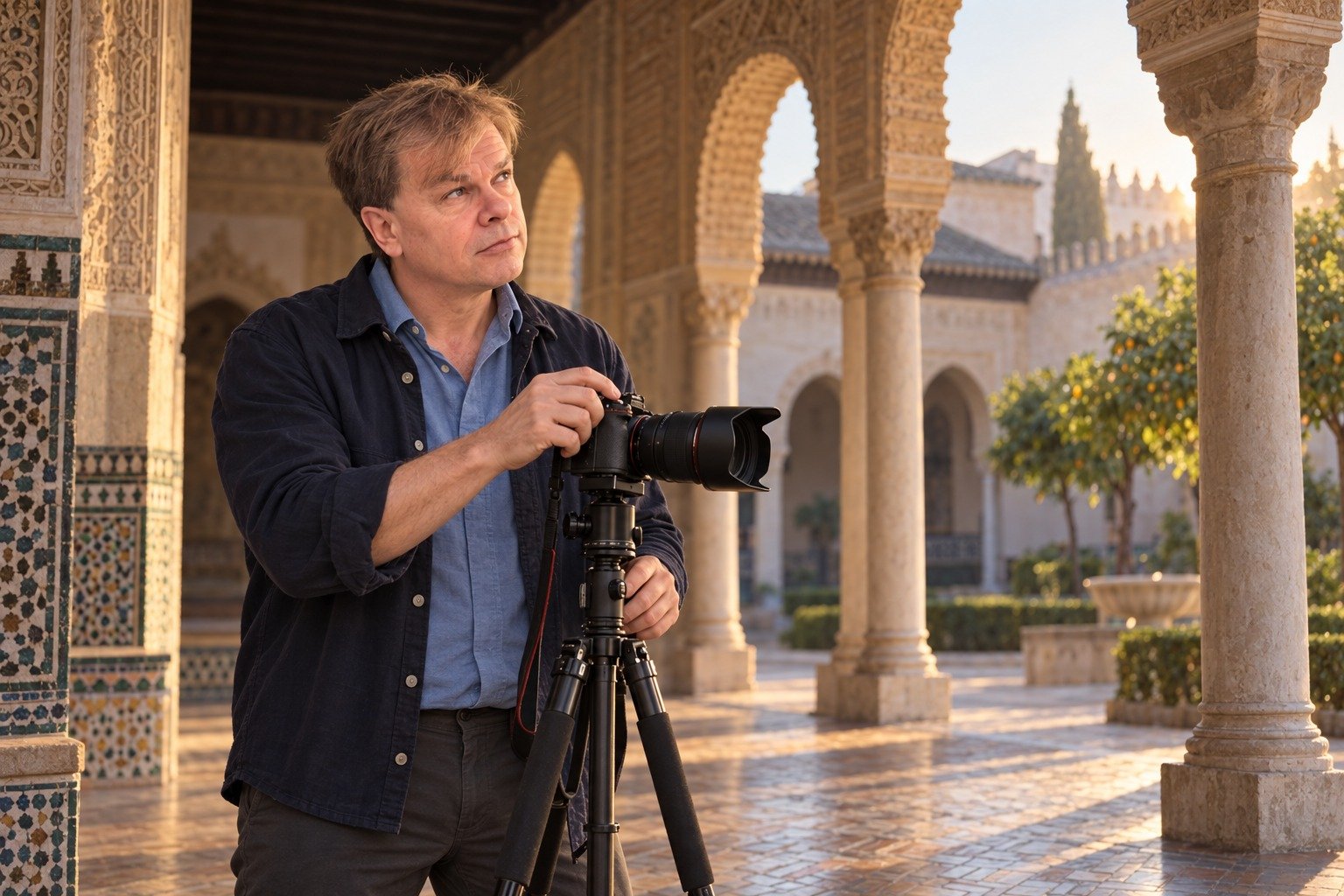
As photography became increasingly important to me, I spent an extended period in Seville concentrating on developing my work. Photographing there, through the intense light and deep shadows of summer and the softer mornings of winter, changed the way I looked at places I thought I already knew.
When I later returned to Tbilisi, London, Oxford and elsewhere with a camera, I found myself seeing familiar streets and buildings differently. Venice became another important part of that journey. I had visited before, but returning specifically to photograph the city transformed my relationship with it and eventually led me beyond Venice itself to the quieter waters and islands of the lagoon.
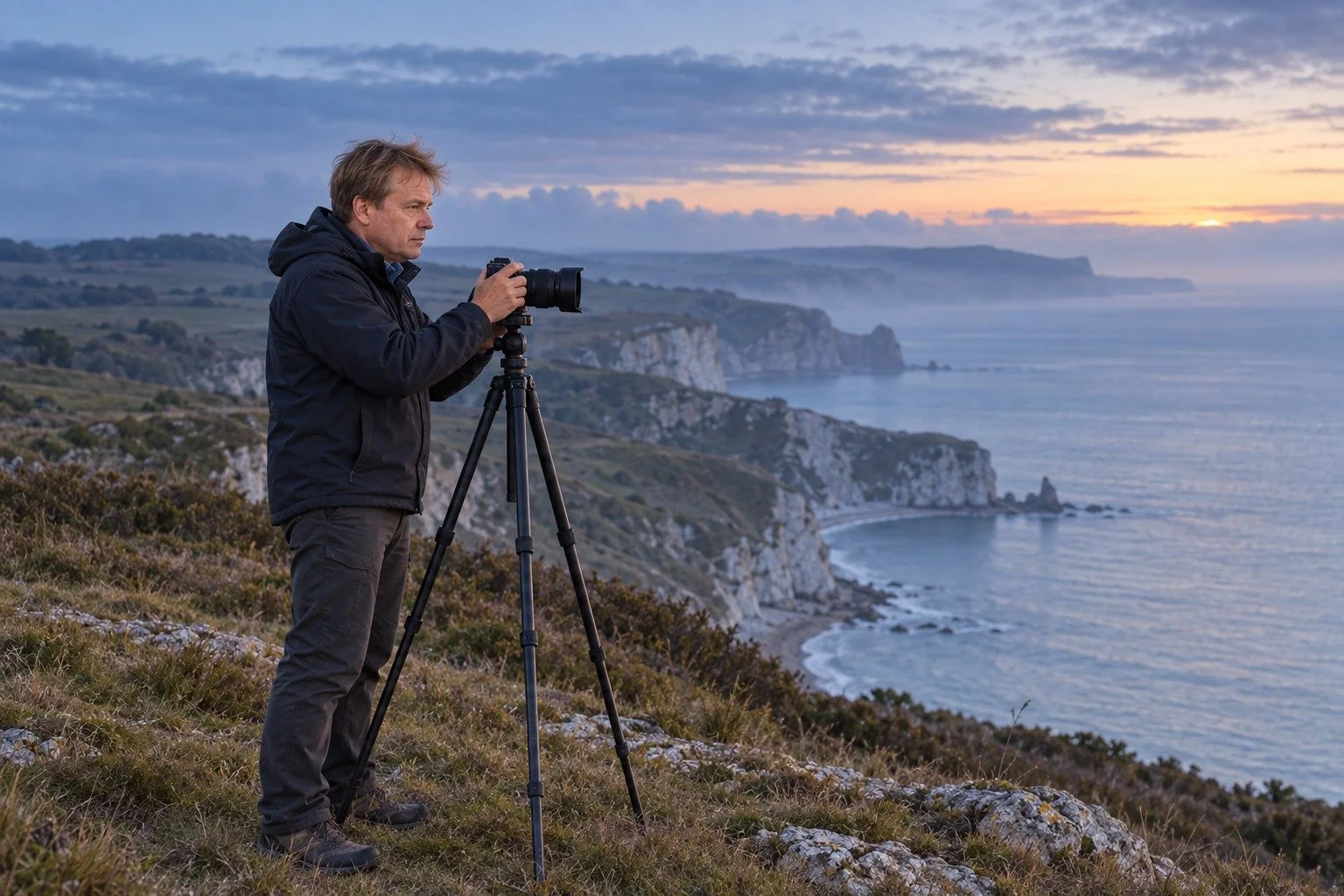
Today I am based in Swanage on the Dorset coast. Being able to return repeatedly to the same landscapes has become an important part of how I work. Rather than arriving in search of a single photograph, I can watch how a familiar place changes with the seasons, tides, weather and light.
Light, Atmosphere and Form
My work is rooted in that sense of place. I photograph cities, coastlines, architecture and the natural world, but I am less interested in simply recording what a place looks like than in expressing something of what it feels like to be there.
Sometimes that comes from stillness. At other times it is found in structure, repetition, colour, texture or the relationship between light and form. In architecture I may be drawn to symmetry and geometry; beside water, to reflections, mist and the meeting of sea and sky; in the landscape, perhaps to a solitary tree or a small element surrounded by open space.
I often use long exposures when they help simplify a scene. Water softens, movement disappears and familiar places can become quieter, more reflective and sometimes almost abstract. Black and white offers another way of looking, allowing shape, tone, texture and shadow to take precedence when colour is no longer necessary to the photograph.
But the image always begins with the experience of being there.
A path disappearing over a Dorset hillside, winter mist beside the water in Kyiv, moonlight over Stonehenge or the first light reaching the buildings of Venice can all begin with something very simple: a moment that makes me stop and look for a little longer.
That connection to place matters to me. The landscapes, cities and buildings we know can become part of our own personal history. Photography can preserve something of that connection, not simply by documenting a location, but by capturing an atmosphere or feeling that has the ability to take us back there.
The feeling I experienced when making a photograph is the starting point, but I don't want to prescribe what somebody else should feel when they look at it. I try to leave enough visual and emotional space for the viewer to enter the scene themselves. The absence of people, simplified compositions and quieter processing are often part of that.
For me, the most successful photographs are not simply somewhere to see, but somewhere to feel. They might suggest stillness, solitude, memory or belonging, but what matters is that the photograph leaves room for the person living with it to find something of their own.
From Photograph to Finished Artwork
The final image is developed slowly. I refine tone, colour and contrast with care, looking for balance rather than effect. My aim is to preserve the character of the original moment while allowing the photograph to become something more considered and expressive.
The same attention continues into the finished artwork. Selected photographs are produced as signed and numbered limited-edition fine art prints using archival-quality materials and carefully chosen presentation methods. Paper, mounting, acrylic glass and framing are selected to complement the individual photograph rather than applying the same treatment to every image.
Each edition is produced to museum-quality standards and accompanied by a signed Certificate of Authenticity.
I want the finished work to be something that can be lived with for many years: a photograph that brings atmosphere and a sense of place into a room, but that also continues to reveal itself over time.
Influences and Practice
Developing My Vision
My photographic vision has been shaped by photographers and painters in equal measure. Ansel Adams first demonstrated to me how light, tone and careful interpretation could transform a landscape into something deeply expressive. I have also drawn inspiration from the drama and scale of Peter Lik’s work, and from contemporary landscape photographers including Mark Denney, Mads Peter Iversen and Nigel Danson. I discovered Mark Denney’s work at a time when I was beginning to take my own photography more seriously, and I have followed the development of his photographic journey alongside my own.
Painting has been equally important. The Impressionists showed me that an artwork need not simply describe what was seen, but can communicate how a place was experienced and felt. Caravaggio’s command of light, colour and depth revealed how illumination can shape atmosphere, direct attention and give a two-dimensional image an extraordinary sense of presence. These influences continue to inform my use of light, tonal contrast and visual restraint.
Learning and Practice
A year living in Seville marked an important turning point. Surrounded by its architecture, courtyards and intense Andalusian light, I began to approach photography with greater purpose. During the COVID period, I used the enforced quiet to deepen my understanding of post-production and refine the methods through which a raw photograph becomes a finished interpretation.
Several photographic educators have contributed to that development. Blake Rudis helped me think more clearly about artistic vision, colour and the purpose behind an edit. Jim Welninski and Jay Vulture were particularly influential in developing my approach to black-and-white photography, long exposure and architectural form. Jay specialises in black-and-white fine art and long-exposure photography, while Jim is recognised for his monochrome, architectural and long-exposure teaching. I also enjoy Dave Kelly’s The Joy of Editing and Todd Dominey’s thoughtful exploration of photography, creativity and the wider process of making images.
I photograph with Sony equipment and develop my images using Adobe Lightroom Classic and Photoshop. My processing also draws on the selective control offered by Tony Kuyper’s TK panels, Blake Rudis’s Zone System Express and Palette Effects, the Nik Collection and DxO FilmPack. These are tools rather than shortcuts: each helps me refine light, colour and tone while preserving the atmosphere and emotional truth of the original experience.